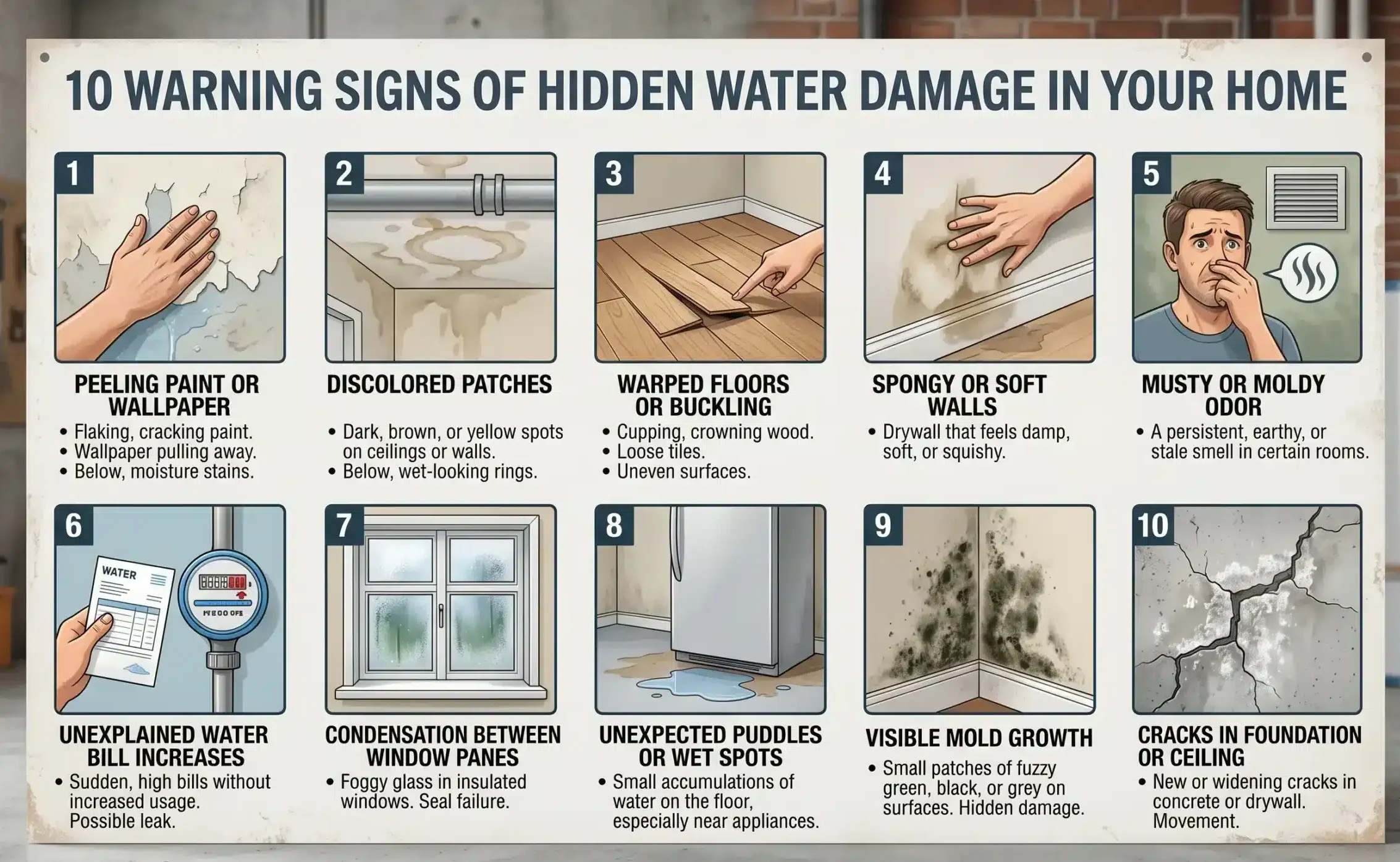
Signs of hidden water damage are easy to miss until the problem becomes serious and expensive. Unlike a burst pipe or flooded basement, where the damage is obvious, hidden water damage happens slowly behind walls, under floors, and inside ceilings — silently destroying your home’s structure and creating ideal conditions for mold growth.
Knowing the signs of hidden water damage helps Halton Region homeowners catch problems early before they turn into major restoration projects.
Musty or Earthy Odors
A persistent musty smell is one of the most reliable signs of hidden water damage. If you notice an earthy or damp odor in your basement, bathroom, laundry room, or any area of your home — especially one that doesn’t go away with cleaning or ventilation — there’s likely moisture trapped somewhere you can’t see.
This smell is caused by mold and mildew growing on wet materials behind drywall, under flooring, or inside HVAC ducts. Even if you can’t see mold, the smell means it’s there. Professional inspection with moisture meters and infrared cameras can pinpoint the exact location.
If musty odors persist, consider a professional mold inspection and remediation before the problem spreads.
Water Stains and Discoloration
Yellow, brown, or copper-colored stains on walls and ceilings are classic signs of hidden water damage. These stains indicate that water has been or is currently seeping through from behind the surface.
Ceiling stains usually mean a roof leak, an upstairs plumbing issue, or condensation problems in the attic. Wall stains can indicate a leaking pipe inside the wall cavity, failed caulking around windows, or exterior water intrusion through siding.
Don’t just paint over water stains. The stain is a symptom — the water source behind it needs to be found and fixed, or the damage will continue getting worse.
Bubbling, Peeling, or Warping Paint and Wallpaper
When moisture builds up behind walls, paint starts bubbling, cracking, or peeling. Wallpaper may lift at the edges or develop visible bumps. These are clear signs of hidden water damage happening inside the wall cavity.
In Halton Region homes, this is often caused by slow plumbing leaks inside walls, condensation from poor insulation during winter, foundation moisture seeping through basement walls, and ice dam leaks during winter months in Oakville and Burlington.
Warped, Buckling, or Soft Floors
Flooring that feels soft, spongy, or uneven underfoot is a serious warning sign. Hardwood floors that are cupping, crowning, or buckling indicate moisture underneath. Laminate flooring with swollen edges or lifted seams has absorbed water from below. Vinyl or tile with loose sections may have water pooling underneath.
Soft spots in flooring — especially near bathrooms, kitchens, laundry rooms, and exterior walls — often indicate a slow leak that has been soaking the subfloor for weeks or months. This type of hidden damage can compromise structural integrity if left unaddressed.
Unexplained Increase in Water Bills
If your water bill suddenly increases without a change in usage, you likely have a hidden leak. Even a small leak — a dripping pipe joint inside a wall — can waste thousands of litres of water per month while silently causing damage you can’t see.
Compare your current bills to the same period last year. An increase of 25% or more with no explanation warrants investigation. A plumber can perform a pressure test to confirm if there’s a leak in your system.
Mold Growth in Unexpected Places
Visible mold in places where you don’t expect moisture — behind furniture, inside closets, on ceiling corners, around window frames — is a strong indicator of hidden water intrusion nearby.
According to Health Canada, mold needs moisture to grow.. If mold is appearing in areas that shouldn’t be wet, water is reaching that location from a hidden source. Common culprits include leaking pipes behind walls, roof leaks channeling water to unexpected locations, condensation from poorly insulated surfaces, and foundation cracks allowing groundwater seepage.
Sounds of Running Water
If you hear water running, dripping, or hissing when all fixtures are turned off, you may have a hidden leak. Listen carefully near walls, under floors, and around your water heater and main supply lines. These sounds are especially noticeable at night when the house is quiet.
Foundation Cracks
New or widening cracks in your foundation walls or basement floor can be both a cause and a sign of hidden water damage. Water pressure from saturated soil pushes against foundation walls, causing cracks. Once cracked, water seeps through and damages interior materials.
In Halton Region, clay soil is common and retains significant moisture. During spring thaw and heavy rain, hydrostatic pressure against foundations increases dramatically, which is why basement flooding is so prevalent across Milton, Halton Hills, and older neighbourhoods throughout the region.
Sagging Ceilings
A ceiling that appears to sag, bow, or bulge is holding water from above. This is a serious structural concern — water-soaked drywall is heavy and can collapse without warning. If you notice ceiling sagging, do not stand underneath it. Evacuate the area and call for professional help immediately.
Pest Infestations
Insects like silverfish, cockroaches, and earwigs are attracted to damp environments. If you notice an unusual increase in these pests, it may indicate hidden moisture problems in your home. Termites and carpenter ants are especially drawn to water-damaged wood and can cause severe structural damage on top of the water damage itself.
What to Do If You Find Signs of Hidden Water Damage
Don’t ignore it. Hidden water damage only gets worse with time. Small problems become big, expensive problems. Here’s what to do:
Call a professional for inspection — A water damage restoration professional uses infrared thermal cameras and moisture meters to find hidden water without tearing open walls.
Fix the source first — There’s no point drying and repairing damage if the water source is still active. Identify and repair the leak, crack, or drainage issue before starting restoration.
Dry completely — Professional structural drying with commercial equipment ensures all hidden moisture is eliminated. This prevents mold growth and further deterioration.
Check for mold — If moisture has been present for more than 48 hours, mold has likely started growing. Professional mold testing confirms whether remediation is needed.
Document for insurance — If the damage is significant, document everything and contact your insurance provider. Our team provides detailed reports to support your claim.
Prevent Hidden Water Damage in Your Home
Inspect plumbing annually — Have a plumber check supply lines, drain connections, and water heater for signs of wear.
Check caulking and grout — Failed caulking around tubs, showers, and windows allows water behind surfaces. Re-caulk every 2 to 3 years.
Monitor your water bill — Unexpected increases signal hidden leaks.
Maintain gutters and drainage — Clogged gutters and poor grading direct water toward your foundation instead of away from it.
Use a dehumidifier — Keep basement humidity below 50% to discourage mold growth and reduce condensation.
Suspect Hidden Water Damage? Call for Professional Inspection
If you’ve noticed any signs of hidden water damage in your home, don’t wait for it to get worse. Call (289) 724-9139 for professional inspection and restoration. We use advanced moisture detection equipment to find hidden water damage without unnecessary demolition.
📞 Call Now: (289) 724-9139 — Serving the Entire Halton Region
0 responses to “Signs of Hidden Water Damage You Should Never Ignore”