Ice dam prevention Halton homeowners needs to be taken seriously before winter arrives. Ice dams form along the edge of your roof when heat escaping from your attic melts snow on the upper sections, and that meltwater refreezes at the colder eaves. Over time, this creates a ridge of ice that traps water on your roof — and that water eventually finds its way into your home through shingles, fascia, and soffits, causing serious interior water damage.
Every winter, Halton Region homeowners deal with costly water damage from ice dams that could have been prevented with proper preparation.
How Ice Dams Form
Understanding how ice dams form is the first step in ice dam prevention Halton homeowners can take.
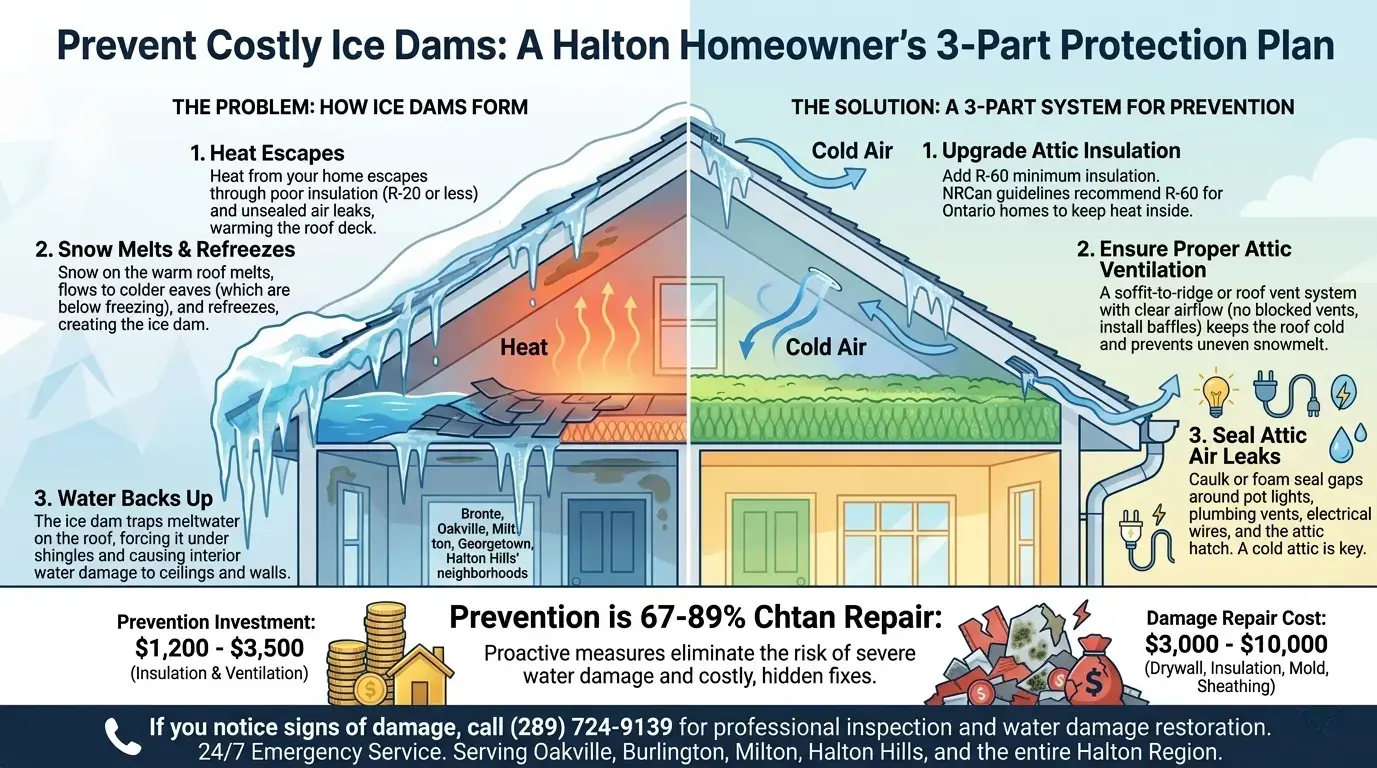
The process starts with heat loss from your living space rising into the attic. That heat warms the upper portion of your roof, melting accumulated snow. The meltwater flows down toward the eaves — the lower edge of your roof that extends beyond your exterior walls. Because the eaves aren’t heated from below, they remain below freezing, and the meltwater refreezes there, forming a growing ridge of ice.
As the ice dam builds up, it creates a barrier that traps additional meltwater behind it. This standing water backs up under shingles and eventually penetrates your roof deck, soaking into attic insulation, ceiling drywall, wall cavities, and interior spaces below.
The result is often extensive water damage that homeowners don’t discover until stains appear on ceilings or walls — by which point significant hidden damage has already occurred.
Why Halton Region Homes Are Vulnerable to Ice Dams
Freeze-Thaw Cycles
Oakville and Burlington experience frequent winter freeze-thaw cycles due to Lake Ontario’s moderating influence. Temperatures can swing above and below freezing multiple times per week, creating perfect conditions for repeated ice dam formation and growth.
Older Home Insulation
Many homes in established Halton Region neighbourhoods — Bronte, Kerr Village, Aldershot, Old Milton, Georgetown — were built decades ago with insulation standards far below today’s requirements. Poor attic insulation allows excessive heat to escape through the roof, accelerating snowmelt and ice dam formation.
Complex Roof Lines
Homes with multiple roof valleys, dormers, and varying pitch angles create areas where snow accumulates unevenly and meltwater gets trapped. These complex roof designs are common in Milton’s newer subdivisions and throughout Halton Hills.
Heavy Snowfall Events
Halton Region receives significant snowfall each winter. Heavy snow loads provide more raw material for ice dam formation. Homes that don’t manage snow accumulation on their roofs face a higher risk.
How to Prevent Ice Dams on Your Halton Home
Improve Attic Insulation
The most effective long-term ice dam prevention Halton homeowners can invest in is proper attic insulation. The current Ontario building code recommends R-60 attic insulation. Many older Halton Region homes have R-20 or less.
Adding insulation to your attic keeps heat inside your living space and out of your attic, reducing the temperature difference between upper and lower sections of your roof. This slows snowmelt and significantly reduces ice dam risk.
Current Natural Resources Canada guidelines recommend R-60 attic insulation for Ontario homes.
Seal Attic Air Leaks
Even with good insulation, warm air can bypass it through gaps around light fixtures, plumbing vents, electrical wires, attic hatches, and bathroom exhaust fans. Sealing these air leaks is just as important as adding insulation — sometimes more so.
Common leak points include recessed ceiling lights (pot lights), bathroom and kitchen exhaust duct penetrations, plumbing stack penetrations, electrical wire holes, attic hatch or door frames, and dropped soffits above kitchen cabinets.
Ensure Proper Attic Ventilation
Your attic should be cold in winter, close to the outdoor temperature. Proper ventilation with soffit vents at the eaves and ridge vents or roof vents at the peak allows cold outside air to flow through the attic, keeping the roof deck uniformly cold and preventing uneven snowmelt.
Make sure soffit vents aren’t blocked by insulation. Install baffles to maintain airflow from soffits to the attic space.
Remove Snow from Your Roof
After heavy snowfalls, use a roof rake (a long-handled tool designed for this purpose) to pull snow off the lower 3 to 4 feet of your roof from ground level. Removing snow eliminates the raw material for ice dam formation.
Never climb onto an icy or snow-covered roof. This is extremely dangerous. Use a roof rake from the ground only, or hire a professional snow removal service.
Keep Gutters Clean
Clogged gutters trap water and ice at the roof edge, contributing to ice dam formation. Clean your gutters thoroughly in the fall before winter arrives. However, understand that clean gutters alone won’t prevent ice dams — insulation and ventilation are the primary solutions.
Install Heat Cables as a Temporary Measure
Electric heat cables (also called de-icing cables) installed along the roof edge and in gutters can help melt channels through ice dams, allowing trapped water to drain. These are a temporary fix, not a permanent solution. Proper insulation and ventilation are always the better long-term investment.
Signs of Ice Dam Water Damage
Ice dam water damage often develops gradually and can be hidden for weeks before becoming visible. Watch for these warning signs:
Water stains on ceilings — Yellow or brown spots appearing on your ceiling during or after winter weather, especially near exterior walls.
Dripping water — Active water dripping from ceiling light fixtures, vents, or along wall edges during or after a freeze-thaw cycle.
Peeling paint — Paint bubbling or peeling on upper walls and ceilings, indicating moisture behind the surface.
Ice visible in soffits — Large icicles hanging from your eaves or visible ice buildup in your soffit area.
Sagging ceiling — A ceiling that appears to sag or bulge is holding water and could collapse. Evacuate the area and call for help immediately.
If you notice any of these signs, the damage may already extend behind walls and into your attic. Professional inspection with infrared cameras and moisture meters can reveal the full extent of hidden damage. Ignoring ice dam damage leads to mold growth, rotting roof sheathing, and increasingly expensive repairs.
What to Do If Ice Dams Are Already Causing Damage
Do not try to chip ice off your roof. You risk damaging shingles and injuring yourself. Do not use salt or chemicals on your roof, as they can corrode roofing materials and gutters.
If water is actively entering your home from an ice dam, place containers to catch drips, move belongings away from the affected area, and call (289) 724-9139 for professional help. Our team can address the interior water damage while you arrange for safe ice dam removal from the roof.
Ice Dam Prevention Halton — Start Before Winter
The best time for ice dam prevention for Halton homeowners is fall, before the first snowfall. Schedule an attic inspection, add insulation where needed, seal air leaks, verify ventilation is working properly, and clean your gutters. These steps cost far less than repairing water damage caused by ice dams.
If ice dams have already caused water damage to your home, don’t wait for spring. Call us now for professional water damage restoration and cleanup services.
📞 Call Now: (289) 724-9139 — 24/7 Emergency Water Damage Response
Serving Oakville, Burlington, Milton, Halton Hills, and the entire Halton Region.
0 responses to “Ice Dam Prevention Halton — Protect Your Roof This Winter”