How to Prevent Frozen Pipes Ontario — Winter Protection Guide
Prevent frozen pipes, Ontario homeowners — this should be at the top of your winter preparation list every year. When water inside your pipes freezes, it expands with enough force to split copper, PVC, and even steel pipes. A single burst pipe can release hundreds of litres of water per hour, causing thousands of dollars in water damage before you even realize what’s happening.
Halton Region’s winters bring frequent freeze-thaw cycles that put your plumbing at constant risk from November through March. Heres how to protect your home.
Why Frozen Pipes Are So Common in Halton Region
Ontario winters regularly bring temperatures well below -7°C — the threshold where pipes begin freezing. But in Halton Region, the risk is made worse by several local factors.
Milton and Halton Hills sit at higher elevations where temperatures drop lower than in lakeside communities. Oakville and Burlington experience rapid freeze-thaw swings caused by Lake Ontario’s moderating effect — temperatures can swing 15°C or more in a single day, repeatedly stressing pipe joints.
Older homes in neighbourhoods like Bronte, Kerr Village, Aldershot, Old Milton, and Georgetown often have original plumbing running through poorly insulated exterior walls, unheated crawl spaces, and exposed basement rim joists — all prime locations for frozen pipes.
Which Pipes Are Most at Risk?
Not all pipes in your home are equally vulnerable. To prevent frozen pipes caused by Ontario winters, focus your protection efforts on these high-risk locations:
Exterior wall pipes — Pipes running through outside walls are closest to freezing temperatures. Kitchen and bathroom supply lines on exterior walls are common culprits.
Unheated garage pipes — If water supply lines run through your garage, they are exposed to near-outdoor temperatures when the garage door is closed.
Crawl space pipes — Uninsulated crawl spaces offer almost no protection from cold. Pipes here can freeze quickly during cold snaps.
Attic and roof space pipes — Any plumbing running through your attic is extremely vulnerable, especially if insulation is thin or displaced.
Basement rim joist area — The rim joist where your foundation meets the framing is one of the least insulated spots in most homes. Pipes near this area are at high risk.
Outdoor hose bibs — Outdoor faucets connected to interior pipes are a common source of frozen pipe bursts when hoses are left connected over winter.
How to Prevent Frozen Pipes in Your Home
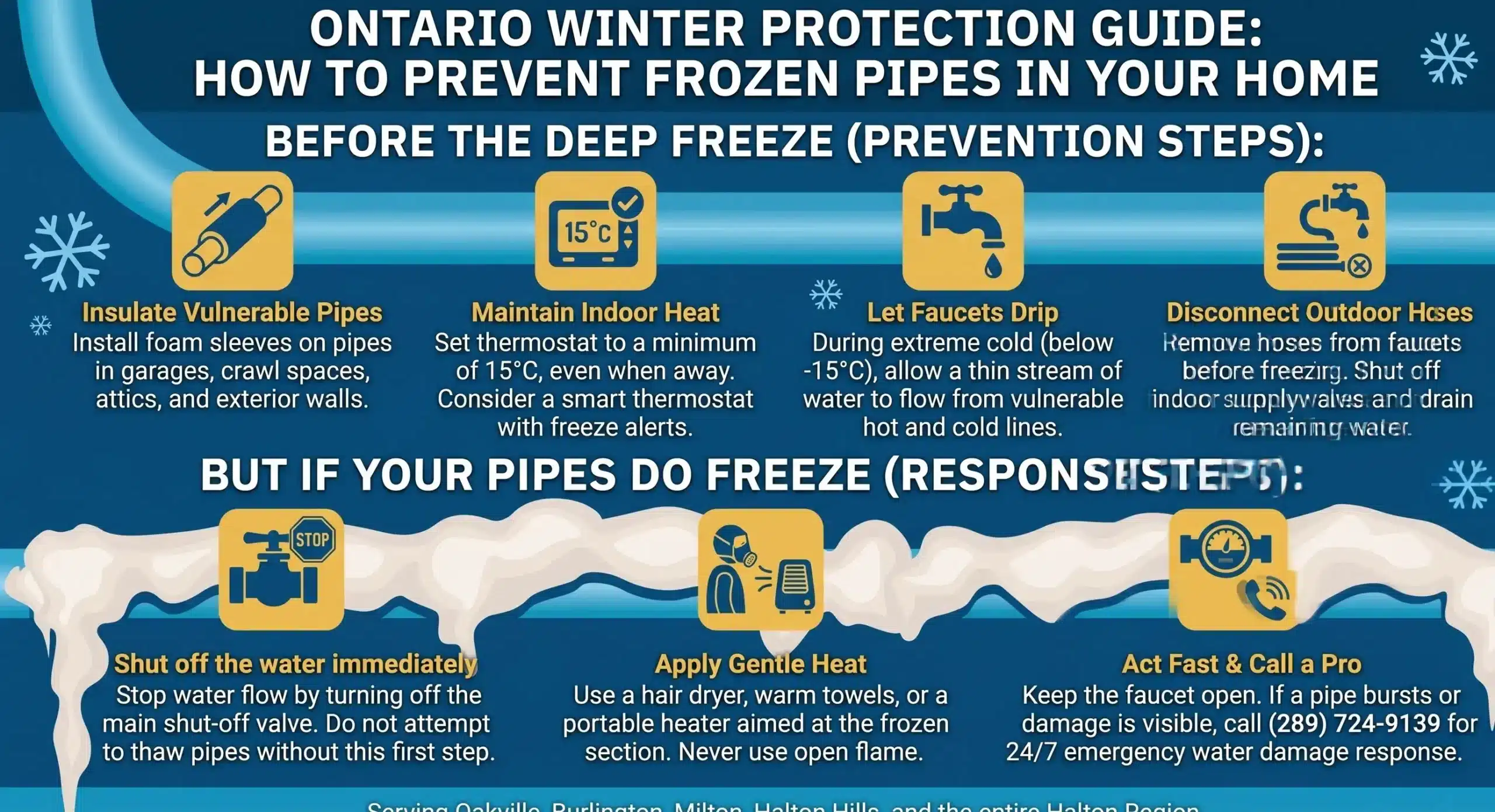
Insulate Vulnerable Pipes
Pipe insulation is the most effective and affordable way to prevent frozen pipes for Ontario homeowners. Foam pipe sleeves cost a few dollars per metre at any hardware store and take minutes to install.
Focus on all pipes in unheated areas — garage, crawl space, attic, exterior walls, and basement rim joist area. For extreme cold areas, consider electric heat tape or heat cable wrapped around the pipe underneath insulation.
Maintain Indoor Heat
Keep your thermostat at a minimum of 15°C at all times during winter — even when you’re away or sleeping. If you’re travelling during winter, never turn off your heating system completely. The cost of keeping your furnace running is far less than the cost of burst pipe water damage restoration. The Insurance Bureau of Canada recommends maintaining a minimum 15°C indoor temperature to prevent pipe freezing.
Consider a smart thermostat with freeze alert functionality that notifies you by phone if indoor temperatures drop to dangerous levels.
Let Faucets Drip During Extreme Cold
During severe cold snaps (below -15°C), let a thin stream of water flow from faucets connected to vulnerable pipes. Moving water is much harder to freeze than standing water. Open both hot and cold lines slightly.
Yes, this wastes a small amount of water. But the cost of running water overnight is negligible compared to the cost of a burst pipe repair.
Open Cabinet Doors
Kitchen and bathroom cabinets on exterior walls trap cold air around pipes. During cold snaps, open cabinet doors to allow warm room air to circulate around the plumbing.
Seal Air Leaks
Cold air infiltration through gaps around pipes, electrical wiring, dryer vents, and other penetrations can freeze nearby pipes even inside heated spaces. Walk through your basement and check for cold drafts around any opening in exterior walls. Seal gaps with caulk or spray foam.
Disconnect Outdoor Hoses
Before the first freeze, disconnect all garden hoses from outdoor faucets. Shut off the indoor valve supplying outdoor hose bibs and open the outdoor faucet to drain remaining water. A connected hose traps water that can freeze backward into the pipe inside your wall.
Insulate Your Garage
If water supply lines run through your garage, keep the garage door closed during winter. Consider insulating the garage door and walls. Even moderate insulation makes a significant difference.
What to Do If Your Pipes Freeze
If you turn on a faucet and only a trickle comes out during cold weather, you likely have a frozen pipe. Act fast before it bursts.
Keep the faucet open — As ice melts, water needs somewhere to flow. An open faucet relieves pressure.
Apply gentle heat — Use a hair dryer, warm towels, or a portable space heater aimed at the suspected frozen area. Work from the faucet end toward the frozen section.
Never use open flame — Blowtorches, propane heaters, and charcoal stoves are fire hazards and can damage pipes. Never use them to thaw pipes.
Check for cracks — While thawing, watch carefully for any cracks or splits in the pipe. If you see damage, shut off the main water supply immediately and call a plumber.
If the pipe has already burst — Shut off your main water valve, turn off electricity to the affected area, and call (289) 724-9139 for emergency water damage restoration.
The Cost of Not Preventing Frozen Pipes
A burst pipe costs far more than prevention. Pipe insulation materials cost $50 to $200 for an entire home. A smart thermostat with freeze alerts costs $150 to $300.
Compare that to burst pipe water damage restoration: minor damage runs $1,500 to $4,000. Moderate damage affecting multiple rooms costs $4,000 to $10,000. Severe damage from a pipe that bursts while you’re on vacation can reach $25,000 or more.
Prevention is always the smarter investment.
Prevent Frozen Pipes — But If They Burst, We’re Here 24/7
Taking steps to prevent frozen pipes Ontario winters cause is the best way to protect your home. But if a pipe does freeze and burst despite your best efforts, call us immediately.
📞 Call Now: (289) 724-9139 — 24/7 Emergency Burst Pipe Water Damage Response
Serving Oakville, Burlington, Milton, Halton Hills, and the entire Halton Region.
0 responses to “How to Prevent Frozen Pipes Ontario — Winter Protection Guide”