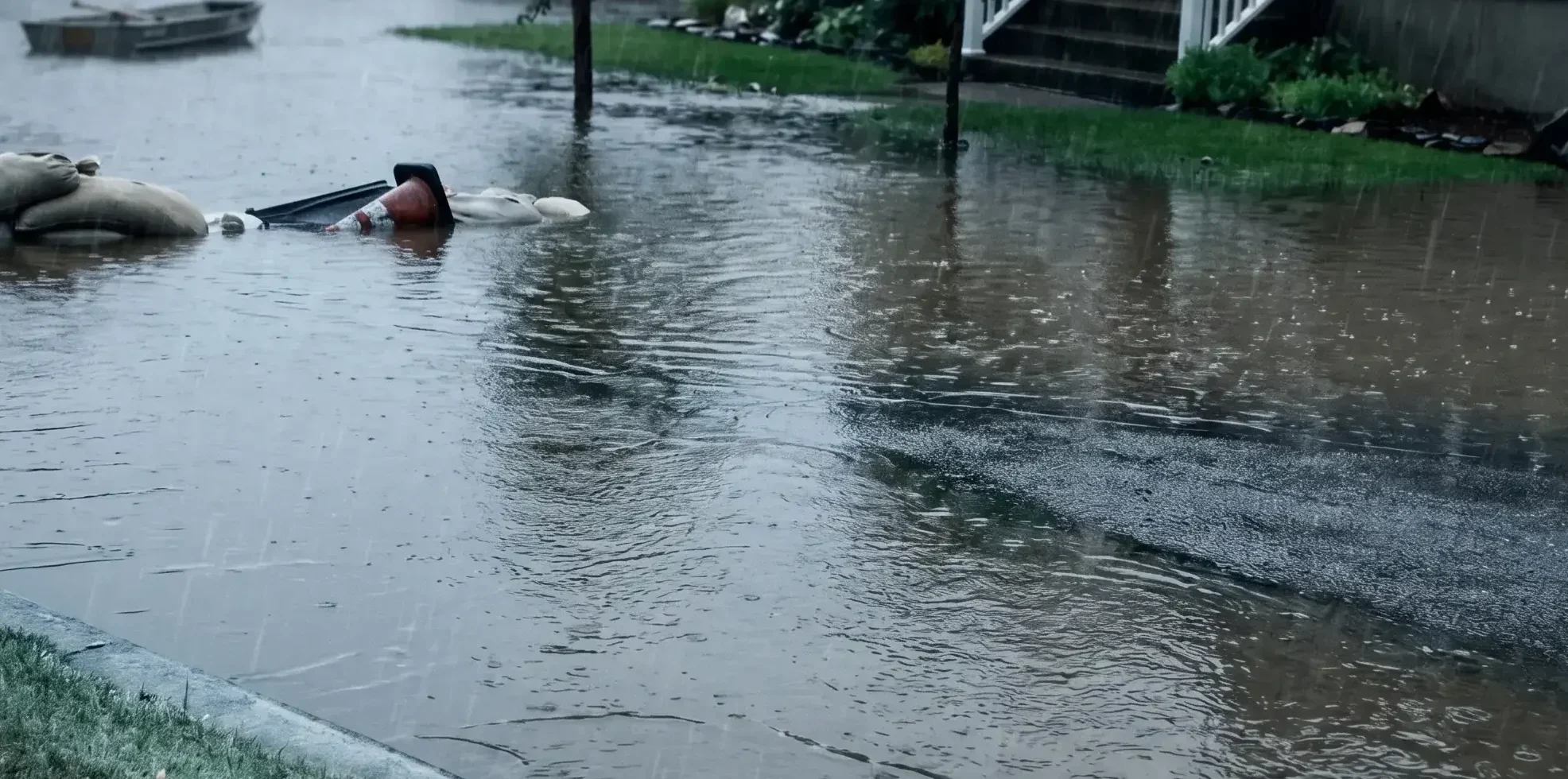
Hawthorne Village flood events challenge an assumption many Milton homeowners make — that newer subdivisions designed with modern stormwater management cant flood. The reality is different. Hawthorne Villages 3,500 homes were built between 1999 and 2024 with sophisticated drainage systems, but recent storm intensities are exceeding what those systems were designed to handle. If your Hawthorne Village home is flooded right now, call our 24/7 emergency response at (289) 724-9139 for rapid service across all three Hawthorne communities and the surrounding Milton.
Most water damage content treats Milton like one neighbourhood. That’s wrong. Hawthorne Village is fundamentally different from Old Milton — different construction era, different drainage standards, different soil conditions, different flood mechanisms. Were writing this from years of Hawthorne emergency response across both the original village and the newer South and East expansions.
Why Hawthorne Village Flood Risk Surprised Homeowners
Hawthorne Village was designed with modern stormwater management. Built by Mattamy Homes starting in 1999 along Sixteen Mile Creek, the development required extensive environmental review and a comprehensive SWM plan to satisfy Conservation Halton. So why does it still flood?
1. Storm intensities exceed 1999 design specs
When Hawthorne Village stormwater systems were designed in the late 1990s, the engineering standard was based on rainfall patterns from the previous 30-50 years. The 2024 July storm delivered 79mm in a single day across Halton — exceeding what 1999-era systems were specced to handle. According to Conservation Halton, modern storm events routinely exceed historical “once in a century” thresholds, and infrastructure designed for older patterns gets overwhelmed.
2. Sixteen Mile Creek middle-stream position
Hawthorne Village runs directly along Sixteen Mile Creek through Milton. This puts the development at the watershed middle reach — receiving runoff from upstream Georgetown headwaters and surrounding Milton, before continuing south toward Oakville. Properties closest to the creek face direct overflow risk during major storms. Properties further back face elevated groundwater pressure for days following heavy rain. Sixteen Mile Creek capacity hasnt been upgraded since Hawthorne was built, even though Miltons population has grown from 30,000 in 1999 to over 145,000 today.
3. WideLot drainage compromise
Mattamys signature “WideLot” design uses shallow and wide lot footprints rather than the traditional deep narrow lots common in older subdivisions. This made homes more affordable and gave better street appeal, but it also reduced the surface area available for proper grading and lot-level stormwater detention. Houses sit closer to property lines, leaving less room for swales, downspout extensions, and surface drainage. When storms exceed system capacity, water has fewer places to go before reaching basements.
4. Density without proportional infrastructure
3,500 families in the original Hawthorne Village plus Hawthorne South and Hawthorne East. The wastewater and stormwater systems were sized for the original development; they have not been comprehensively upgraded to handle the density of the expanded communities. The 1999 Big Pipe water main project addressed water supply — not stormwater capacity.
Hawthorne Village Flood Patterns by Sub-Area
Hawthorne isnt one development. Each phase faces different flood risks.
Original Hawthorne Village (1999-2010 construction)
Built directly along Sixteen Mile Creek with the original SWM plan. Homes here face the highest combined risk: oldest infrastructure within the Hawthorne system, closest creek proximity, original 1999-era weeping tiles and sump pumps that are now 20-25 years old. Battery backup sump pump upgrades are highly recommended. Backwater valve installation provides important secondary protection.
Hawthorne South Village (2015-2020 construction)
Newer construction with updated drainage standards but built further from the creek mainstem. Lower direct overflow risk, higher groundwater seepage risk because of clay-loam soil composition. Sump pump capacity is the primary concern here — most South Village pumps were specced for normal conditions and struggle during major events.
Hawthorne East Village (2024+ construction)
Newest construction with modern drainage standards but most exposed to recent climate intensification. The current building code accounts for higher rainfall expectations, but only time will reveal whether 2024 construction holds up to storm events 10-20 years from now. Early indicators suggest foundation seepage is the most common issue, typical of new construction settling combined with clay soil.
What to Do When Hawthorne Village Flood Hits — First 30 Minutes
Hawthorne flooding usually appears in one of three patterns: foundation seepage from creek-elevated groundwater, sump pump failure during sustained storms, or surface flooding from overwhelmed lot drainage.
Call (289) 724-9139 immediately. While our team mobilizes:
- Check the sump pump first. Hawthorne homes rely heavily on sump systems. If the pump isnt running but water is rising, check the circuit breaker, the float switch, and battery backup status if equipped.
- Cut electricity at the panel if water has reached outlets, the furnace, or appliance plugs. Newer homes have GFCI protection on basement outlets, but flood water still creates risk near non-GFCI circuits.
- Identify the water source. Floor drain backup means sewer/stormwater backflow. Wall seepage means groundwater pressure. Window well overflow means surface flooding. Many Hawthorne events involve multiple sources during major storms.
- Stop water use upstairs if floor drain is backing up. Sinks, showers, dishwashers, and washing machines add to combined backflow conditions.
- Document before cleanup. Photos, video, water levels marked on walls. Mattamy homes often have warranty implications for newer constructions — comprehensive documentation supports both insurance and warranty claims.
- Call insurance within 24 hours. Confirm sewer backup endorsement, overland water coverage, AND groundwater coverage are active. Hawthorne claims regularly involve multiple coverage types.
For broader timing guidance, see our basement flooding first 24 hours guide.
Insurance Challenges Specific to Hawthorne Village
Modern Hawthorne homes face different insurance issues than older Milton properties.
Coverage gap on newer construction warranty
Mattamy homes within Tarion warranty period have construction defect coverage, but flooding from external sources (creek overflow, municipal sewer backup, overland water) is not warranty-covered. Homeowners sometimes assume warranty covers all water damage; it doesnt. Standard homeowner insurance with appropriate endorsements is still essential.
Multi-source flood coverage
Standalone sewer backup endorsement doesnt cover surface water through window wells, or groundwater seeping through foundation walls. Hawthorne floods often involve all three water sources simultaneously. The Insurance Bureau of Canada reports water damage exceeds fire as the leading Canadian home insurance claim — and coverage gaps in newer subdivisions are increasingly being exposed.
Premium finishes vs coverage limits
Hawthorne East and newer South Village homes often have higher-end basement finishes. Standard sewer backup endorsement limits of $5,000-$10,000 dont cover Hawthorne reconstruction averaging $20,000-$35,000. Increase limits before storm season.
Halton Region Programs for Hawthorne Village
Halton Region $675 Enhanced Subsidy
The Halton Region basement flooding program reimburses up to $675 toward backwater valves, sump pump upgrades, battery backup installation, and downspout disconnection. For Hawthorne Village specifically:
- Original Hawthorne Village (1999-2010): Sump pump replacement plus battery backup priority — original 20-25 year old pumps are at end of life
- Hawthorne South Village: Battery backup installation if not already equipped
- Hawthorne East Village: Downspout disconnection plus exterior drainage assessment as new construction settles
- All Hawthorne properties: Backwater valve installation if not present
Town of Milton infrastructure planning
The Town of Milton flood hazard mapping identifies Sixteen Mile Creek corridor properties including portions of Hawthorne. Properties identified within the regulatory flood plain face specific building restrictions and insurance considerations.
Halton Region is conducting field investigations across 268 km of wastewater mains, including parts of newer Milton subdivisions. If your Hawthorne home has experienced repeat flooding, contact the Region to add your address to the active investigation list.
Hawthorne Village Compared to Other Milton Communities
Milton isnt one flood profile:
- Hawthorne Village (1999-2024): Modern subdivision with creek proximity, WideLot drainage compromise, density growth pressure (this guide)
- Old Milton (1850-1970s): Heritage downtown with original combined sewers and clay tile weeping systems
- Bronte Meadows (1990s): Transition-era subdivision with intermediate drainage standards
- Dempsey (1970s-80s): Older suburban with 25-30 year old infrastructure approaching end of life
- Coates / Willmott (2010s): Modern eastside subdivisions with creek proximity and density issues similar to Hawthorne
If you own properties across Milton, each location requires different prevention investment.
How Our Team Responds to Hawthorne Village Flood
Our Hawthorne response protocol accounts for the modern construction profile:
- Rapid arrival — typically 60-90 minutes for Hawthorne, depending on storm-related access
- Multi-source identification — foundation seepage vs sump failure vs surface flooding; Hawthorne events often involve multiple sources simultaneously
- Water extraction — truck-mounted equipment scaled to volume; Hawthorne basements with finished spaces require careful contents handling
- Category classification — clean water (Category 1) vs contaminated water (Category 3) requires very different protocols and insurance handling
- Selective demolition — modern Hawthorne construction uses more drywall and engineered flooring than older Milton homes, both of which need quick removal when contaminated
- Structural drying — newer construction typically dries faster than heritage homes, often 3-5 days versus 7-10 days for older properties
- Tarion warranty coordination — for homes still within Mattamy warranty period, coordinating with the builder on covered components
- Insurance documentation — comprehensive scope reports designed for multi-endorsement Hawthorne claims
- Reconstruction — drywall, finishes, flooring; coordination with licensed plumbers for sump and backwater valve upgrades
For full basement flood services, see our basement flood cleanup page.
If your Hawthorne Village home is dealing with flooding, call (289) 724-9139. We respond 24/7 across Milton, Oakville, Burlington, and Halton Hills.
Frequently Asked Questions
Why does my newer Hawthorne Village home flood when older Milton homes nearby dont?
Modern subdivisions like Hawthorne were designed for rainfall patterns that have since intensified. Older Milton homes often have one of two advantages: smaller, simpler basements that limit flood impact, or established weeping tile systems that drain to older municipal infrastructure differently. Hawthorne homes face creek proximity, dense lot patterns, and stormwater systems specced for less intense storms. Newer doesnt always mean drier.
Are the 1999-era Mattamy sump pumps in the original Hawthorne Village still working?
Many are at or past end of life. Standard residential sump pumps last 7-15 years. Original 1999 Hawthorne pumps are now 25+ years old. Even if they still run, capacity has declined and reliability is uncertain. Replacement plus battery backup is the priority upgrade for original Hawthorne Village homes.
Does Sixteen Mile Creek overflow directly into Hawthorne basements?
Rarely as direct overflow. More commonly, Sixteen Mile Creek levels rise during storms, elevating groundwater table across the Hawthorne development for days following heavy rain. This sustained groundwater pressure causes foundation seepage even in homes well-removed from the visible creek bank.
Which Hawthorne sub-area has the highest basement flooding risk?
Original Hawthorne Village (1999-2010 construction) typically has the highest risk due to aging infrastructure within the development. Properties closest to the creek face the highest combined risk regardless of sub-area. Hawthorne East Village is too new to have a long flood history but follows modern construction standards.
Can I get the Halton Region subsidy in Hawthorne if my home is under the Mattamy warranty?
Yes, generally. The Halton Region subsidy applies to homeowner-funded improvements. Mattamy warranty covers construction defects, not voluntary upgrades like backup pumps or backwater valves. Check warranty terms before any structural modification to confirm warranty isnt affected by the upgrade.
How long does Hawthorne Village flood cleanup typically take?
Initial water extraction completes within 4-8 hours for most events. Drying takes 3-7 days for modern Hawthorne construction, faster than older Milton homes because of newer materials and assemblies. Full reconstruction, including finishes takes 2-6 weeks depending on damage extent and insurance approval. Higher-end Hawthorne East and South Village finishes can extend reconstruction.
0 responses to “Hawthorne Village Flood: Top 5 Emergency Tips in Milton”