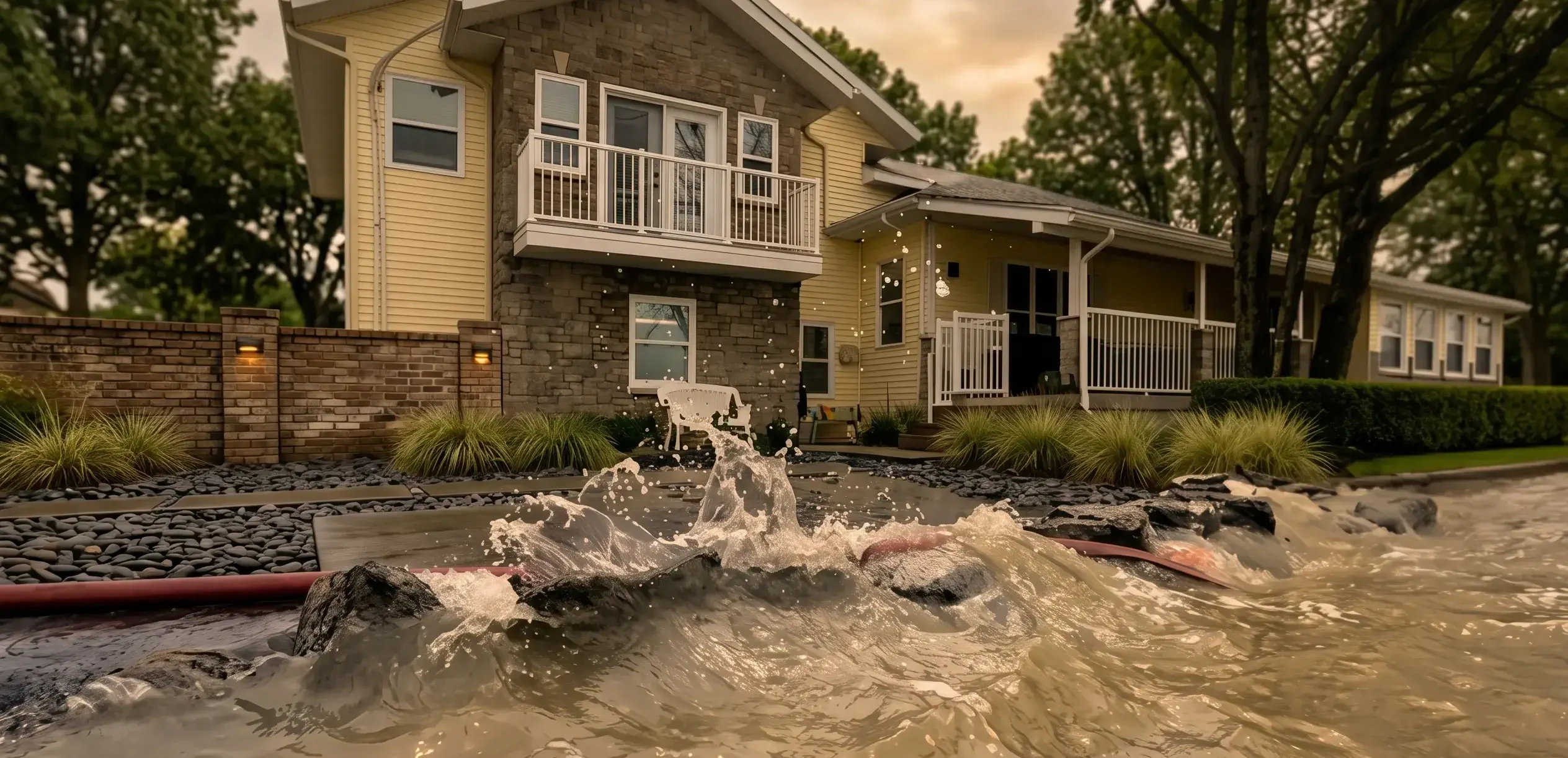
Acton flooding Ontario events involve risks the rest of Halton Region doesnt face. This 1828 heritage village at the northern edge of Halton Hills sits on a branch of the Credit River — not Sixteen Mile Creek like the rest of Halton — and many properties operate on private wells and septic systems instead of municipal infrastructure. If your Acton home is flooding right now, call our 24/7 emergency response at (289) 724-9139 for rapid service across Mill Street, Main Street, and rural properties throughout the L7J postal area.
Most water damage content treats Halton Region as one unit. Thats wrong for Acton. With heritage stone foundations from the 1820s, Credit River watershed dynamics, and a mix of village and rural properties using septic and well systems, Acton flooding requires response protocols different from Georgetown, Milton, or Oakville. Were writing this from years of cleanup response across northern Halton Hills.
Why Acton Flooding Ontario Is Different from Other Halton Communities
Four factors make Acton flooding fundamentally different from anywhere else in Halton Region. Other Halton communities typically face one or two of these. Acton faces all four.
1. Credit River watershed (not Sixteen Mile)
While Georgetown, Milton, and Oakville drain through Sixteen Mile Creek to Lake Ontario, Acton sits on a branch of the Credit River — a completely separate watershed that drains to Lake Ontario through Mississauga and the Port Credit area. The Credit Valley Conservation authority manages flood mapping and storm response for Acton properties, not Conservation Halton like the rest of Halton Hills. Insurance considerations, municipal coordination, and emergency response routing all reflect this watershed difference.
2. Heritage 1820s building stock
Acton was founded in 1828 by Methodist preacher Rev. Ezra Adams and his brothers. The village contains some of Halton Regions oldest residential and commercial structures, with stone foundations, lath-and-plaster walls, and original wood framing predating modern construction methods entirely. These heritage buildings respond to water exposure very differently from modern construction. Drying takes longer. Mold risk runs higher. Salvage decisions require heritage-aware judgement.
3. Private well and septic systems
Many rural Acton properties operate on private wells for water supply and septic systems for wastewater — not municipal water and sewer like Oakville or Burlington. This changes everything about flood response. Well water contamination from surface flooding requires testing and treatment. Septic system failure during flooding creates Category 3 biological contamination throughout flooded basements. These rural infrastructure considerations dont apply to most Halton communities.
4. Highest-elevation Halton location
Acton sits at 350 metres elevation, the highest in Halton Region. This means runoff from Acton flows downstream into the entire Credit River system. While Acton itself faces flash flooding from intense storm cells, the village rarely experiences the sustained groundwater pressure that affects lower-elevation Halton communities like Glen Abbey or Aldershot. Acton flooding is faster-onset and faster-receding, but more acute when it hits.
Acton Flooding by Property Type
Your Acton property type determines your flood risk and response approach.
Heritage village properties (downtown Acton + Mill Street area)
1820s-1920s stone-foundation homes and commercial buildings. Foundation seepage is the most common issue, not sewer backup. Combined sewer infrastructure under the oldest streets dates to the early municipal era. Backwater valve installation is critical for heritage homes connected to municipal sewers. Heritage designation in some downtown blocks affects what exterior modifications are permitted.
1950s-1980s residential Acton
Post-war expansion homes with municipal water and sewer connections. Original drainage and sump systems often near end of life. Sump pump replacement plus battery backup is highly recommended for this era. Backwater valve installation provides important secondary protection.
Modern Acton subdivisions (1990s-2020s)
Newer construction with modern drainage standards. Most issues are foundation settling cracks at the 15-25 year mark or sump pump capacity during major storms. Lower baseline flood risk than older Acton, but storm intensification still creates problems.
Rural Acton properties (outside village)
Private well and septic system properties on larger lots. Flood response involves well water testing, septic system damage assessment, and longer drying times due to remote location and infrastructure complexity. Insurance coverage often requires specific rural endorsements distinct from village policies.
What to Do When Acton Flooding Hits — 6 Top Emergency Steps
Acton flooding events frequently involve multiple water sources at once. Knowing what to do in the first 30 minutes protects both your property and your familys safety.
Call (289) 724-9139 immediately. While our team mobilizes:
- Evacuate the basement if water has reached electrical outlets or contains sewer or septic material. Category 3 contaminated water from septic system failure is especially dangerous and requires professional handling.
- Cut electricity at the panel if water level approaches outlets, the furnace, or appliance plugs. Heritage Acton homes with original wiring face elevated electrical risk during flooding.
- Identify the water source. Clear water through foundation walls suggests groundwater or surface flooding. Cloudy water through floor drain indicates combined sewer backup. Sewage smell or visible solid waste means septic system failure (rural properties) or sewer backup (village properties).
- Stop water use upstairs if backup is occurring. Sinks, toilets, showers, dishwashers, and washing machines all add to backflow conditions, whether municipal sewer or private septic.
- Document everything before cleanup. Photos and video including water levels marked on walls. Heritage buildings often need additional documentation for both insurance and any heritage-related restoration considerations. Rural properties may need additional documentation for well and septic assessments.
- Call insurance within 24 hours. Confirm sewer backup endorsement, overland water coverage, groundwater coverage, AND (for rural properties) septic system failure coverage are active. Acton claims often involve multiple coverage types simultaneously.
For broader timing guidance, see our basement flooding first 24 hours guide.
Why Acton Insurance Claims Are Different
Acton faces unique insurance challenges other Halton communities dont:
Heritage property valuation
Heritage Acton homes have insurance value that exceeds standard replacement cost because original 1820s-1900s materials cant be modern-replaced. A cut stone foundation isnt poured concrete. Original heart pine flooring isnt engineered hardwood. Insurance settlements based on standard replacement schedules often fall short for true heritage restoration. Discuss heritage value coverage with your insurer before storm season.
Rural property coverage gaps
Standard urban homeowner policies often dont cover well water contamination from flooding or septic system failure damage. Rural Acton properties typically need specific endorsements for these risks. The Insurance Bureau of Canada reports water damage now exceeds fire as the leading Canadian home claim — and rural coverage gaps are widening as storm intensity increases.
Credit Valley vs Conservation Halton
Acton flooding response coordinates with Credit Valley Conservation, not Conservation Halton like the rest of Halton Hills. Some insurers may need specific watershed identification on claims. This rarely affects coverage but can affect documentation requirements.
Town of Halton Hills + Halton Region Programs for Acton
Halton Region $675 Enhanced Subsidy
The Halton Region basement flooding program reimburses up to $675 toward backwater valves, sump pump upgrades, battery backup, and downspout disconnection. Acton residents qualify like all other Halton homeowners. For Acton specifically:
- Heritage village properties: Backwater valve installation (highest priority for combined sewer connected homes)
- 1950s-1980s residential: Sump pump replacement plus battery backup
- Modern subdivisions: Downspout disconnection plus sump pump capacity check
- Rural properties: Subsidy applies to eligible improvements, but well/septic upgrades require separate programs
Town of Halton Hills + Credit Valley Conservation
The Town of Halton Hills flooding resources document specific Acton-area considerations, including Credit River corridor properties. Properties identified within the Credit Valley Conservation regulatory flood plain face specific building restrictions and insurance considerations. If your Acton property has experienced repeat flooding, contact both the Town and Credit Valley Conservation to add your address to active investigations.
Acton Compared to Other Halton Hills Communities
Halton Hills isnt one flood profile, and Acton differs sharply from the rest of the Town:
- Acton: Credit River watershed, 1820s heritage, rural well/septic mix, 350m elevation (this guide)
- Georgetown: Sixteen Mile Creek headwaters, 1950s-70s urban infrastructure, April 2025 re-flood case study
- Glen Williams: Credit River proximity (similar to Acton watershed), mixed urban-rural
- Norval: Credit River + Silver Creek confluence, hamlet with elevated overland risk
- Rural Halton Hills (general): Septic, well, larger lots, agricultural land use
If you own properties across Halton Hills, each location requires different prevention investment and emergency response.
How Our Team Responds to Acton Flooding Ontario
Our Acton response protocol accounts for heritage building considerations and rural infrastructure complexity:
- Rapid arrival — typically 75-105 minutes for Acton, longer for remote rural properties
- Multi-source identification — surface flooding vs sewer/septic backup vs foundation seepage; Acton events frequently involve multiple sources
- Water extraction — truck-mounted equipment scaled to volume; rural properties may need additional setup time and equipment positioning
- Category classification — Category 3 septic-affected water requires very different protocols than Category 1 clean groundwater. Heritage building considerations may add complexity to demolition decisions
- Heritage-aware demolition — selective removal preserving salvageable historic materials where possible
- Extended structural drying — heritage stone foundations and plaster walls typically need 7-12 days, longer than the Halton average of 3-7 days for modern construction
- Well and septic assessment coordination — for rural properties, coordinating with licensed well drillers and septic specialists for system evaluation
- Insurance documentation — comprehensive scope reports designed for complex Acton heritage and rural claims
- Reconstruction — drywall, finishes, flooring; coordination with heritage-aware contractors for historic restoration where required
For full basement flood services, see our basement flood cleanup page.
If your Acton home is dealing with flooding, call (289) 724-9139. We respond 24/7 across Halton Hills, Milton, Oakville, and Burlington.
Frequently Asked Questions
Why is Acton flooding Ontario different from Georgetown or other Halton Hills areas?
Acton sits on the Credit River watershed, not Sixteen Mile Creek like Georgetown and the rest of Halton. The village was founded in 1828 with heritage stone-foundation buildings predating modern construction. Many rural Acton properties use private wells and septic systems instead of municipal infrastructure. Acton also sits at 350 metres elevation, the highest in Halton Region. All four factors combine to make Acton flooding response fundamentally different from other Halton communities.
Does Credit Valley Conservation or Conservation Halton handle Acton flooding response?
Credit Valley Conservation handles Acton because the village drains through the Credit River watershed. Most of Halton Region falls under Conservation Halton (Sixteen Mile Creek and other Halton watersheds), but Acton is the exception. This affects flood mapping, regulatory flood plain designation, and some insurance documentation requirements.
What special considerations apply to rural Acton properties with wells and septic systems?
Surface flooding can contaminate well water and damage septic systems. After flooding, well water requires testing for bacterial contamination before consumption. Septic systems may need pumping and assessment by licensed specialists. Standard urban homeowner insurance policies often dont cover well water contamination or septic system failure damage — rural properties typically need specific endorsements. Always assume well water is unsafe to drink after any flooding event until professionally tested.
Are heritage Acton buildings harder to dry after water damage?
Yes, significantly. Heritage homes with stone foundations and original plaster walls hold moisture longer than modern drywall construction. Drying typically takes 7-12 days versus the Halton average of 3-7 days. Some heritage materials cant be removed and replaced like modern materials, which complicates restoration. Heritage-designated properties may also have exterior modification restrictions that affect waterproofing options.
Can I get the $675 Halton Region subsidy for a rural Acton property?
Yes, the Halton Region basement flooding subsidy applies to all Halton homeowners regardless of property type. Backwater valve installation, sump pump upgrades, battery backup, and downspout disconnection are all eligible. However, well and septic system upgrades fall outside this subsidy and would need separate funding or municipal programs specifically for rural infrastructure.
How long does Acton flooding cleanup typically take?
Initial water extraction completes within 4-8 hours for most events, longer for remote rural properties due to access and equipment positioning. Drying takes 7-12 days for heritage Acton buildings and 3-7 days for modern construction. Full reconstruction including finishes takes 4-12 weeks depending on damage extent, heritage considerations, rural infrastructure complexity, and insurance approval timelines.
0 responses to “Acton Flooding Ontario: 6 Top Emergency Tips Now”