How fast does mold grow after water damage? Faster than most homeowners expect. Mold can begin colonizing wet surfaces within 24 to 48 hours after water exposure — and once it takes hold, it spreads rapidly through your home, damaging building materials and creating health risks for your family.
Understanding mold growth timelines helps Halton Region homeowners make smarter decisions about when to call for professional help and why rapid response to water damage matters so much.
The Mold Growth Timeline After Water Damage
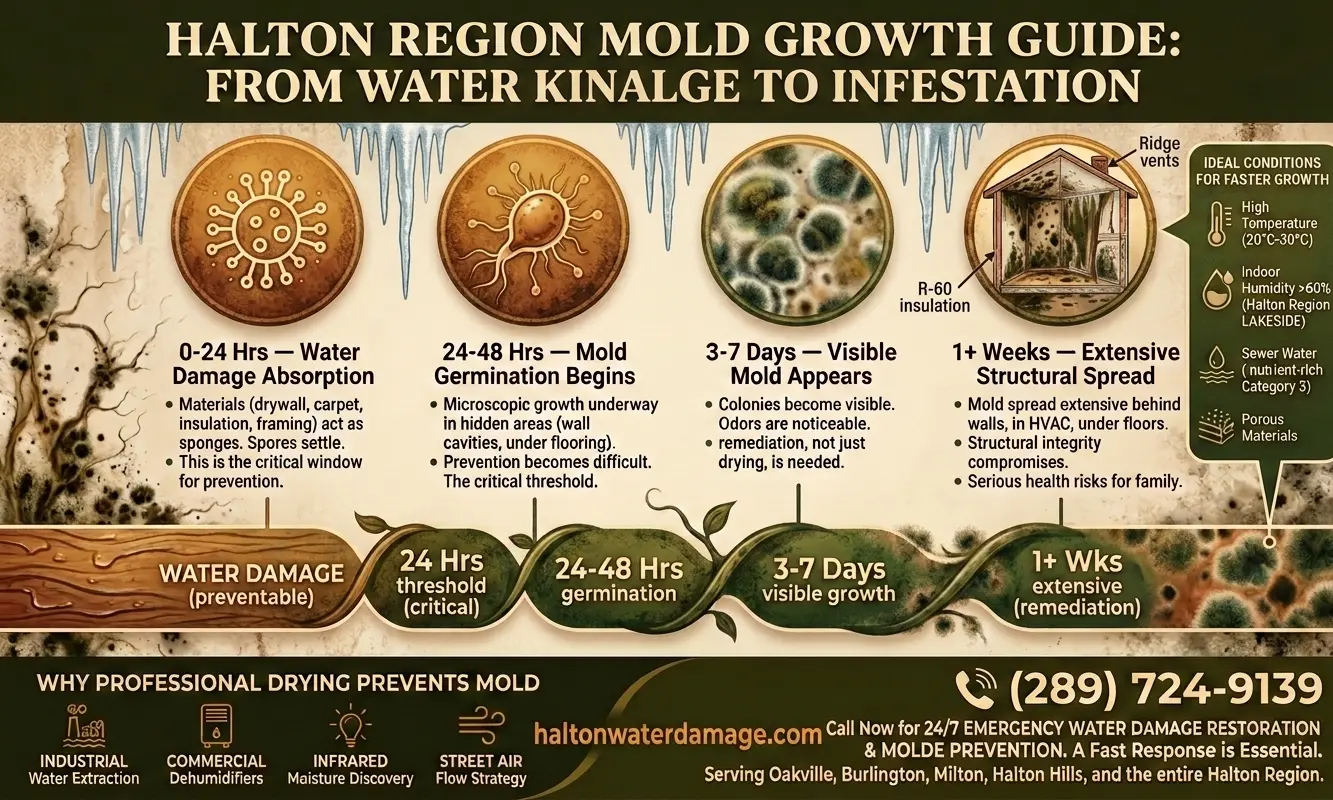
0 to 24 Hours — Moisture Absorption
In the first 24 hours after water damage, building materials absorb moisture rapidly. Drywall, carpet, insulation, wood framing, and ceiling tiles act like sponges — pulling water deep into their structure. At this stage, mold spores already present in your indoor air begin settling on wet surfaces and preparing to germinate.
This is the critical window for action. If professional water extraction and drying begin within the first 24 hours, mold growth can be prevented in the vast majority of cases.
24 to 48 Hours — Mold Begins Growing
According to Health Canada, mold can begin growing on damp materials within 24 to 48 hours. At this stage, mold spores germinate and start forming colonies on wet surfaces. You may not see visible mold yet, but microscopic growth is already underway — particularly in warm, dark, humid spaces like wall cavities, under flooring, and behind baseboards.
This is why how fast does mold grow after water damage is such an important question. The 48-hour mark is the critical threshold — after this point, preventing mold becomes much more difficult and expensive.
3 to 7 Days — Visible Mold Appears
Within 3 to 7 days, mold colonies become large enough to see. Black, green, white, or grey patches start appearing on walls, ceilings, baseboards, and other surfaces. Musty odors become noticeable. Mold begins producing spores that spread through the air to colonize new areas of your home.
At this stage, simple drying is no longer enough. Professional mold remediation is required to safely remove existing mold, treat affected areas with antimicrobial agents, and prevent further spread.
1 to 2 Weeks — Extensive Spread
After one to two weeks of unchecked moisture, mold growth becomes extensive. Colonies spread behind walls, under flooring, into HVAC ductwork, and through ceiling cavities. The structural integrity of building materials begins to deteriorate. Health symptoms may develop in household members — particularly those with allergies, asthma, or compromised immune systems.
Remediation costs increase significantly at this stage because more material needs to be removed and replaced.
2+ Weeks — Serious Structural and Health Concerns
After two or more weeks, mold can compromise the structural integrity of wood framing, roof sheathing, and subfloor. Extensive mold contamination may make portions of your home unsafe for occupancy. Full-scale professional remediation is required, often involving the removal of large sections of drywall, insulation, flooring, and potentially structural elements.
What Conditions Make Mold Grow Faster?
Not all water damage situations produce mold at the same rate. Several factors speed up or slow down growth.
Temperature — Mold thrives in temperatures between 20°C and 30°C. Heated homes in winter and warm summer conditions in Halton Region provide ideal growing temperatures. Cold basements slow mold slightly, but don’t prevent it.
Humidity — Indoor humidity above 60% dramatically accelerates mold growth. Oakville and Burlington’s lakeside location means naturally higher humidity, especially in spring and summer.
Material type — Porous materials like drywall, carpet, insulation, and ceiling tiles grow mold fastest because they absorb and retain moisture. Non-porous surfaces like concrete, metal, and glass resist mold better but can still support surface growth.
Air circulation — Stagnant air allows moisture to linger and mold to establish. Areas behind furniture, inside closets, and within wall cavities have poor air movement — making them prime locations for hidden mold growth.
Water type — Sewer backup water (Category 3) contains organic nutrients that actually feed mold growth, accelerating colonization compared to clean water from a burst pipe.
Why Professional Drying Prevents Mold
The reason professional water damage restoration prevents mold is simple — it’s fast and thorough enough to eliminate moisture before the 24 to 48-hour mold growth window closes.
Professional restoration includes industrial water extraction that removes standing water in hours rather than days. Commercial dehumidifiers that pull moisture from the air and building materials far faster than household fans. Infrared cameras and moisture meters that find hidden moisture you can’t see or feel. Strategic air mover placement that forces moisture out of wall cavities, under flooring, and other hidden spaces.
DIY cleanup with household fans and open windows simply can’t match this speed and thoroughness. Homeowners who try to dry water damage themselves often miss hidden moisture behind walls and under floors — leading to mold growth weeks later that requires expensive remediation.
Signs of Mold After Water Damage
Watch for these indicators that mold has developed after a water damage event:
Musty odors — An earthy, damp smell that persists despite cleaning and ventilation.
Visible patches — Black, green, white, or grey spots on walls, ceilings, baseboards, or other surfaces.
Allergic symptoms — Sneezing, congestion, coughing, eye irritation, or skin rashes that worsen when you’re home.
Discoloration — Walls or ceilings changing color in areas affected by water damage.
Peeling paint — Paint or wallpaper bubbling and peeling in areas near the water damage.
If you notice any of these signs after water damage, don’t delay. Call for professional mold inspection and remediation before the problem spreads further.
What to Do Right Now
If your home has experienced water damage — whether from basement flooding, a burst pipe, sewer backup, roof leak, or appliance failure — the single most important factor in preventing mold is how quickly you respond.
Within 24 hours: Call for professional water extraction and drying. Mold prevention is still highly effective.
24 to 48 hours: Call immediately. Mold may have started, but it can still be contained with rapid professional intervention.
After 48 hours, Mold has likely begun growing. You need both water damage restoration and mold inspection to assess the full situation.
📞 Call Now: (289) 724-9139 — 24/7 Emergency Water Damage Restoration
A fast response prevents mold. Serving Oakville, Burlington, Milton, Halton Hills, and the entire Halton Region.
0 responses to “How Fast Does Mold Grow After Water Damage?”