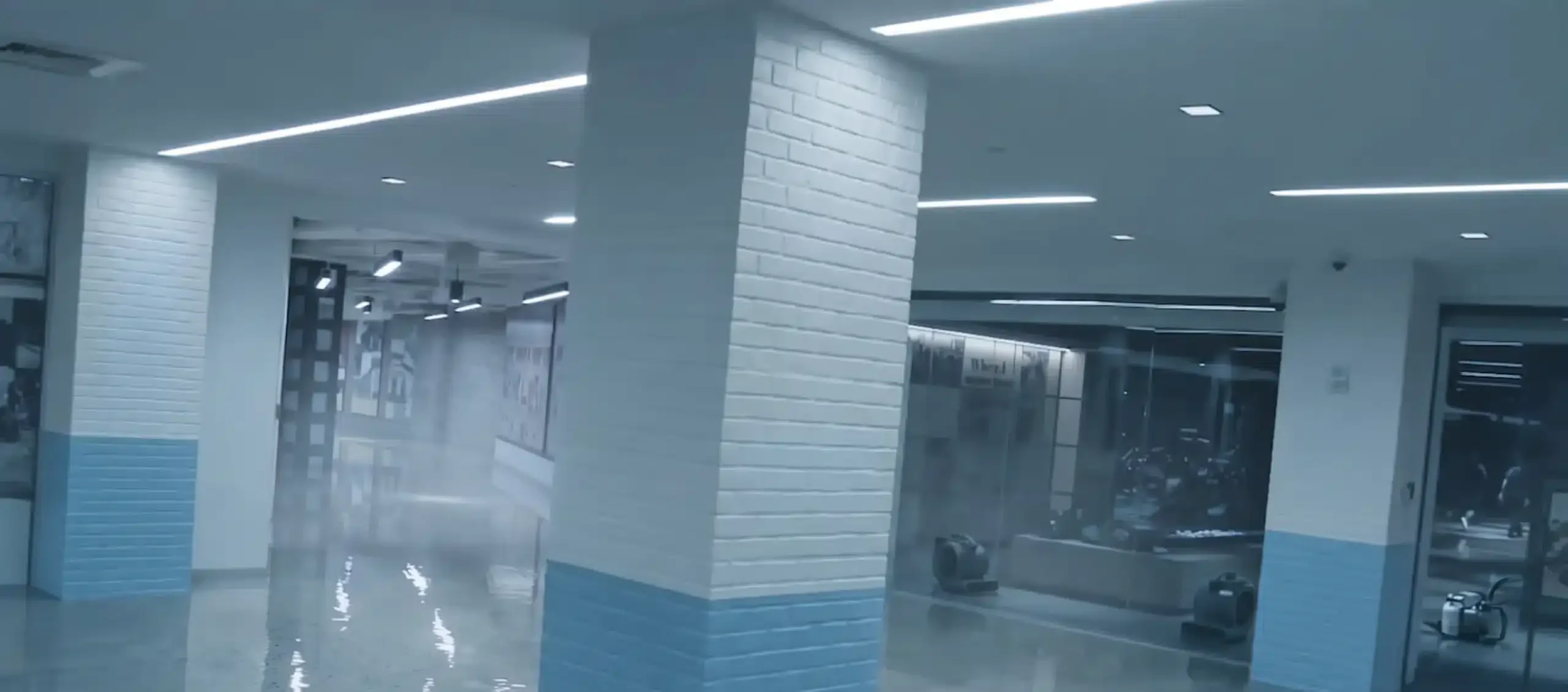
Georgetown basement flooding hit homes harder than anywhere else in Halton Hills during the last two storm seasons — and the homeowners worst affected were often the ones who had already invested in flood prevention. April 2025 brought a brutal lesson: backwater valves, sump pumps, and disconnected downspouts werent enough for many Georgetown homes. If your basement has water right now, call our 24/7 team at (289) 724-9139 for emergency response across Georgetown, Glen Williams, Acton, Norval, and Halton Hills.
Most generic Halton flooding content treats Georgetown like any other urban centre. Thats wrong. Georgetown sits at the headwaters of Sixteen Mile Creek, operates on infrastructure designed for 1960s rainfall, and experienced the highest concentration of basement floods in Halton Hills during both July 2024 and April 2025. Were writing this from the cleanup side — Georgetown basement flooding response demands understanding why this specific town floods the way it does.
Why Georgetown Basement Flooding Keeps Getting Worse
Three structural factors compound to make Georgetown the highest-flood-risk urban centre in Halton Hills. None of them are getting better on their own.
1. Aging combined sewer infrastructure
Most of Georgetown built between the 1950s and 1970s sits on combined sewer systems where a single municipal pipe carries both sanitary waste and storm runoff. During heavy rain, the pipe fills beyond capacity and backflows into basements through floor drains. The Town of Halton Hills has documented that the Georgetown wastewater system experienced flow rates up to 19 times normal dry weather flow during the July 2024 storm.
2. Sixteen Mile Creek headwaters location
Georgetown sits at the headwaters of Sixteen Mile Creek, which flows south through Milton and Oakville to Lake Ontario. When upstream subdivisions flood, water concentrates in Georgetown before continuing south. Properties along Trafalgar Road, Mountainview Road, and the creek-adjacent streets face elevated risk from both direct creek overflow and elevated groundwater pressure.
3. Storm pattern intensification
Halton Hills received 79 mm of rainfall in a single day during the July 2024 storm — more than an entire months normal rainfall in one event. Conservation Halton and Credit Valley Conservation reported totals up to 118 mm within their watersheds. Then April 2025 brought another major flooding event. Georgetown homeowners are now experiencing what infrastructure designers in the 1960s considered “once in a century” events every few years.
The April 2025 Lesson — Why Prevention Wasnt Enough
This is the hardest part of Georgetown basement flooding to talk about. Homeowners who had done everything right — backwater valves installed, sump pumps with battery backup, downspouts disconnected, regrading completed — still flooded during the April 2025 event.
The reason isnt that prevention failed. The reason is that some failure modes overwhelm even good prevention:
- Sustained storm duration exceeded battery backup pump capacity (typical batteries run 4-7 hours; some April 2025 storms lasted 12+ hours)
- Combined sewer surcharge created pressures backwater valves werent rated for
- Foundation seepage from saturated soil bypassed all interior drainage systems
- Surface water entry through window wells overwhelmed sump capacity
- Power outages coincided with peak rainfall in some neighbourhoods
Georgetown homeowners reading this who already invested in prevention shouldnt feel like that work was wasted. It still reduced damage significantly compared to unprotected homes. But the lesson for everyone is that prevention is layered — no single solution covers every failure mode.
Georgetown Basement Flooding by Neighbourhood
Specific Georgetown areas have specific flood patterns. Your neighbourhood determines your priority investments.
Downtown Georgetown (along Main Street)
Oldest infrastructure, primarily combined sewers, smallest lot sizes with limited drainage options. Backwater valves are non-negotiable here. Many homes also have basement walkouts or low entry points facing the street that need additional surface water protection.
South Georgetown
Mix of 1970s-1990s construction, mostly separated sewers but some combined sections remain. Sump pump capacity matters most. Battery backup is essential — South Georgetown experiences more frequent simultaneous power outages with storms.
Glen Williams (north Georgetown)
Older heritage homes plus newer subdivisions. The Credit River runs through Glen Williams, adding overland flood risk to typical urban basement flooding. Properties near the river need overland water insurance coverage on top of sewer backup endorsement.
Trafalgar Road corridor
Mixed residential and commercial with stormwater drainage flowing toward Sixteen Mile Creek. Properties on cross streets like Maple Avenue, Mountainview, and Guelph Street face combined risk from upstream runoff and aging sewer infrastructure.
Mountainview and east Georgetown
Generally newer subdivisions with separated sewers and modern drainage standards. Lower flood risk than central Georgetown, but not zero. Sump pump testing and basic prevention still essential.
What to Do When Georgetown Basement Flooding Hits — First 30 Minutes
Georgetown floods often involve multiple water sources simultaneously, especially in April-May storm season.
Call (289) 724-9139 immediately. While our team mobilizes:
- Evacuate the basement. If sewer water is present, its Category 3 contaminated and biologically dangerous.
- Cut electricity at the panel if water has reached outlets, the furnace, or appliances. Georgetown homes with original 1950s-1960s wiring face elevated risk.
- Stop water use upstairs. Toilets, showers, dishwashers, washing machines all add to combined sewer backflow.
- Identify the source. Floor drain backup means combined sewer overflow. Window well overflow means surface water. Foundation seepage means groundwater. Often more than one is happening simultaneously in Georgetown.
- Document before cleanup. Photos, video, water levels marked on walls. Both insurance and the Halton Region investigation (currently surveying 268 km of wastewater mains across the region) benefit from accurate citizen documentation.
- Call insurance within 24 hours. Confirm sewer backup endorsement, overland water coverage, and groundwater coverage are active.
For broader emergency response guidance, see our basement flooding first 24 hours guide.
Why Georgetown Insurance Claims Get Reduced
Georgetown homeowners face specific insurance issues that other Halton municipalities dont:
Reason 1: Single-endorsement coverage gaps
A standalone sewer backup endorsement covers wastewater backflow. It doesnt cover surface water entering through window wells, or groundwater seeping through foundation walls. Georgetown floods often involve all three water sources simultaneously. Comprehensive Georgetown coverage typically needs sewer backup endorsement, overland water coverage, AND groundwater coverage. The Insurance Bureau of Canada reports water damage now exceeds fire as the leading Canadian home claim — and the gap between policies and actual loss is widening.
Reason 2: Pre-1990 home backwater valve requirements
Some Ontario insurers now require backwater valves as a coverage condition for pre-1990 homes in known flood zones. Georgetown qualifies. If your downtown or older Glen Williams home doesnt have a valve, expect either coverage decline at renewal or significant claim reduction at the next event.
Reason 3: Coverage limits below replacement cost
Standard sewer backup endorsement limits run $5,000-$10,000. Average Georgetown finished basement reconstruction runs $18,000-$32,000. Most affected homeowners discover this gap at claim time. Increase limits before storm season — premium increases are modest.
Town of Halton Hills + Halton Region Programs
Georgetown homeowners stack two programs:
Town of Halton Hills permit fee waiver
The Town currently waives building permit fees for backwater valve, backflow preventer, and sump pump installations. This typically saves $200-$400 per project on top of any subsidy.
Halton Region $675 Enhanced Subsidy
The Halton Region basement flooding program reimburses up to $675 toward backwater valves, sump pump upgrades, and downspout disconnection. Georgetown residents qualify like all other Halton homeowners.
For Georgetown specifically, priority depends on your neighbourhood:
- Downtown / Main Street area: Backwater valve (highest ROI for combined sewer areas)
- South Georgetown: Battery backup sump pump
- Glen Williams (near Credit River): Combination — both valve and pump, plus overland water insurance
- Trafalgar corridor: Downspout disconnection plus pump capacity upgrade
The Halton Region is also conducting field investigations across 268 km of wastewater mains in priority flooding areas, including parts of Georgetown. If your home has flooded multiple times, contact the Region to ensure your address is part of the active investigation.
Georgetown Compared to Other Halton Hills Communities
Halton Hills isnt one flood profile:
- Georgetown: Urban combined sewers, headwaters location, highest density flood risk (this guide)
- Acton: Older heritage homes with stone foundations, less municipal infrastructure
- Glen Williams: Credit River proximity, mixed urban-rural profile
- Norval: Credit River + Silver Creek confluence, hamlet with elevated overland risk
- Rural Halton Hills: Septic systems, private wells, completely different framework — see our Sewer Backup Halton Hills guide for the rural side
If you own properties across Halton Hills, each location requires different prevention investment.
How Our Team Responds to Georgetown Basement Flooding
Our Georgetown response protocol accounts for the multi-source flooding common during major storms:
- Rapid arrival — typically 45-75 minutes for Georgetown, longer for Glen Williams and rural surrounds
- Multi-source identification — combined sewer overflow vs window well vs foundation seepage; April 2025 events often involved all three
- Water extraction — truck-mounted equipment scaled to volume; some Georgetown homes saw 4+ feet of basement water
- Sanitization — antimicrobial treatment for sewer-affected areas; downtown Georgetown homes often need full Category 3 protocols
- Selective demolition — porous materials that contacted sewer water removed; older Georgetown homes with plaster walls require careful heritage-aware removal
- Structural drying — industrial dehumidifiers and air movers; pre-1970 Georgetown construction typically needs longer drying cycles
- Insurance documentation — comprehensive scope reports designed for complex multi-endorsement Georgetown claims
- Reconstruction — drywall, flooring, finish replacement; coordination with licensed plumbers for backwater valve and sump upgrades
For full basement flood services, see our basement flood cleanup page.
If your Georgetown home is dealing with basement flooding, call (289) 724-9139. We respond 24/7 across Halton Hills, Milton, Oakville, and Burlington.
Frequently Asked Questions
Why did my Georgetown basement flood in April 2025 despite my backwater valve and sump pump?
The April 2025 storm exceeded what most single-system prevention can handle. Sustained rainfall outlasted typical battery backup pump capacity. Combined sewer surcharge created pressures some valves couldnt withstand. Surface water through window wells and foundation seepage bypassed interior systems entirely. Layered prevention is required for Georgetown homes facing increasingly intense storms.
Does the Sixteen Mile Creek affect basement flooding away from the creek itself?
Yes. Sixteen Mile Creek headwaters in Georgetown means storm runoff concentrates in town before flowing south. Even properties blocks away from the creek experience elevated groundwater pressure and stormwater backup during major events. Conservation Halton flood mapping shows the full impact zone.
Which Georgetown neighbourhood has the highest basement flooding risk?
Downtown Georgetown along Main Street has the highest risk due to oldest combined sewer infrastructure. Glen Williams adds Credit River overland flood risk. South Georgetown and Mountainview have lower urban infrastructure risk but newer subdivisions still face storm intensification.
Is the Halton Region investigation going to fix Georgetown flooding?
The Region is currently surveying 268 km of wastewater mains across priority flood areas, including parts of Georgetown. Identified improper connections and damaged pipes are being remediated. This addresses one cause of basement flooding (private-side stormwater entering wastewater systems) but doesnt fix underlying combined sewer overflow during major storms. Personal prevention remains essential.
Can I get the $675 Halton Region subsidy if I already have a backwater valve?
Yes. The subsidy can apply to additional upgrades like sump pump replacement, battery backup installation, or downspout disconnection. Existing valve installation doesnt disqualify you from other eligible improvements.
How long does Georgetown basement flood cleanup typically take?
Initial water extraction completes within 4-8 hours for most events. Drying takes 4-10 days depending on construction era — older Georgetown homes with plaster walls and original framing dry slower than modern drywall. Full reconstruction including finishes takes 2-8 weeks. Insurance approval timelines often extend the total project to 4-12 weeks.
0 responses to “Georgetown Basement Flooding: Critical 24/7 Emergency Help”