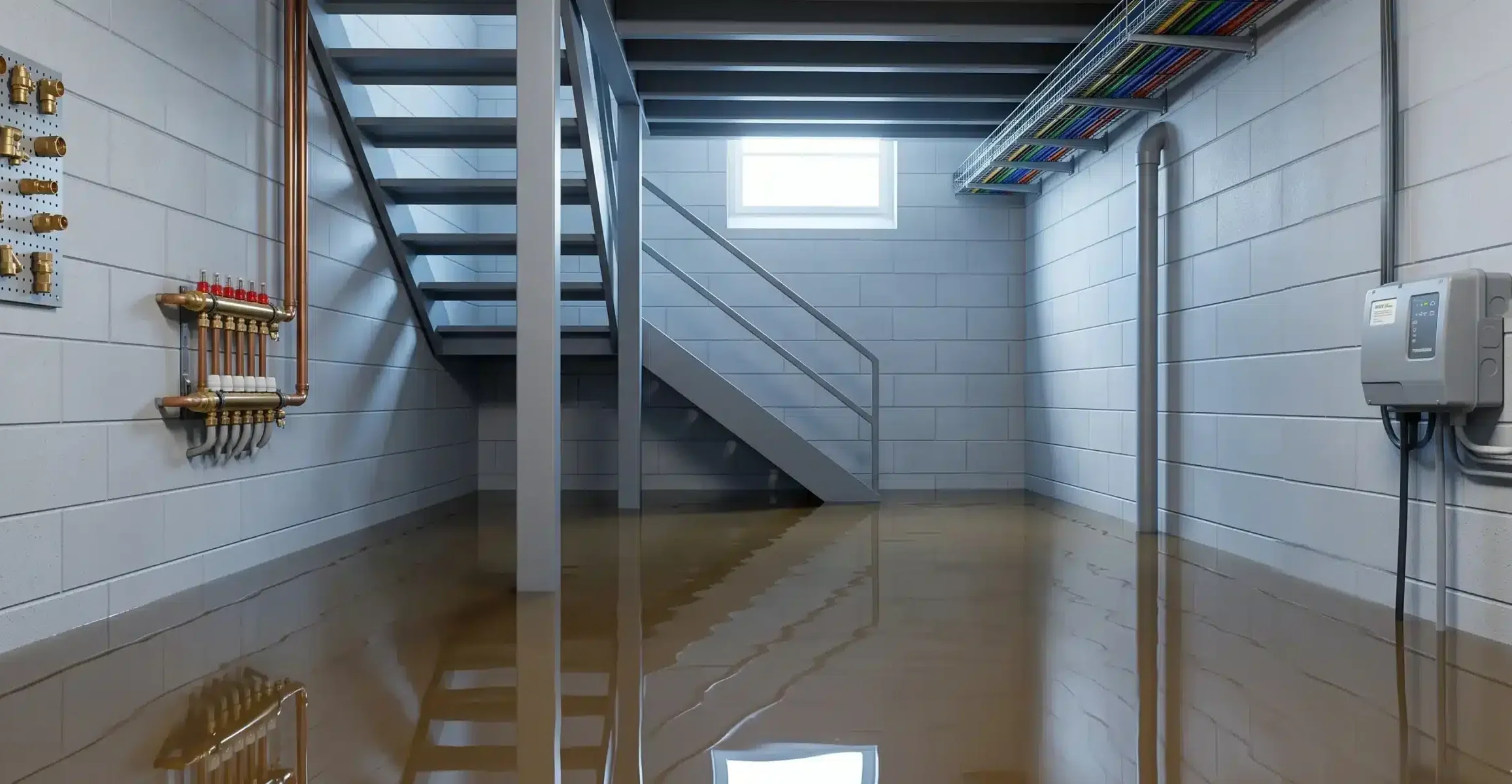
Aldershot basement flooding is unlike anywhere else in Burlington — and most homeowners only learn this the hard way. While greater Burlington manages a mix of separated and combined sewers, Aldershot specifically sits on aging combined infrastructure, hugs the Lake Ontario shoreline, and has a water table that rises faster than the rest of the city during storms. If your Aldershot home has water in the basement right now, call our 24/7 team at (289) 724-9139 for emergency response across Aldershot, Burlington, Oakville, Milton, and Halton Hills.
Most generic Burlington flood guides miss the point for Aldershot homeowners. The causes here are different. The infrastructure is different. The prevention strategy is different. Were writing this from the cleanup side — Aldershot basement flooding response requires understanding why this small post-WWII neighbourhood floods more than the rest of Burlington combined.
Why Aldershot Basement Flooding Hits Harder Than Burlington Average
Aldershot is a small neighbourhood with outsized flood risk. Roughly bounded by Highway 403 to the north, Lake Ontario to the south, the Hamilton border to the west, and Brant Street to the east, Aldershot was built primarily in the post-WWII 1950s era and hasnt had a major infrastructure update since. Three factors compound to create Burlingtons highest-risk basement flooding zone:
1. Combined sewer infrastructure
Most of Burlington moved to separated sewer systems decades ago — sanitary waste in one pipe, storm runoff in another. Aldershot didnt. Many streets including parts of Plains Road East, Spring Gardens Road, and the older Cooke Boulevard area still operate on combined sewers where a single municipal pipe carries everything. During heavy rain, that pipe overflows back through basement floor drains. The mechanism is identical to what we covered in our Sewer Backup Burlington guide — but Aldershot homes face it more frequently than any other Burlington neighbourhood.
2. Lake Ontario shoreline pressure
Aldershot homes sit on relatively low elevation along the Lake Ontario shoreline. When lake levels rise during storms — particularly nor easter wind events — the local water table rises with them. Foundation seepage that wouldnt happen in higher Burlington elevations becomes routine here. LaSalle Park, the south end of King Road, and homes south of Plains Road West face this constantly.
3. Highway 403 and QEW runoff
Two major highways drain stormwater toward Aldershot. Conservation Halton manages culverts and storm channels designed for 1960s rainfall patterns — not what Halton actually gets now. During the July 2024 Burlington storm, when the city received over 1,600 basement flooding reports in 48 hours, Aldershot accounted for a disproportionate share given its small population.
Aldershot Basement Flooding — Street-by-Street Risk Patterns
Specific Aldershot streets have specific flood patterns. Knowing which group your home falls into determines your prevention investment.
Plains Road East corridor
The commercial spine of Aldershot. Mixed residential-commercial, oldest sewer infrastructure, highest combined-sewer overflow risk. Homeowners here should prioritize backwater valve installation above all other prevention measures.
Spring Gardens Road and Hidden Valley
Older single-family residential with mature trees and 1950s-1960s construction. Tree root infiltration of laterals is the dominant secondary failure mode. Sump pumps installed in the original construction era are now decades past their service life.
LaSalle Park and south Cooke Boulevard
Closest to the Lake Ontario shoreline. High water table is the dominant issue. Sump pump capacity and battery backup matter most here — when storms knock out power and groundwater rises simultaneously, basements fill within hours.
King Road and Maple Avenue
Mid-elevation Aldershot, mixed combined and separated sewers depending on installation date. Homeowners should verify their specific street with the City of Burlington before assuming infrastructure type.
What to Do When Aldershot Basement Flooding Hits — First 30 Minutes
Aldershot floods often happen during multi-hour storm events with simultaneous power outages. Your response window is short.
Call (289) 724-9139 immediately. While our team mobilizes:
- Evacuate the basement. If sewer backup is involved, the water is Category 3 contaminated and biologically dangerous.
- Cut electricity at the panel if water has reached outlets, the furnace, or appliances. Aldershot homes with pre-1980s wiring face higher risk.
- Stop water use upstairs. Toilets, showers, dishwashers, and washing machines all add to the backflow during sewer events.
- Identify your flood source. Floor drain backup means combined sewer overflow. Foundation seepage means high water table. Window well overflow means surface water entry. Each requires different cleanup priority.
- Document before cleanup. Photos, video, water levels marked on walls, source point if visible. Insurance claims live or die on this evidence.
- Call insurance within 24 hours. Confirm both sewer backup endorsement and overland water coverage are active.
For broader emergency guidance, see our basement flooding first 24 hours guide.
Why Aldershot Insurance Claims Get Reduced
Standard Ontario home insurance has gaps that hit Aldershot homeowners particularly hard. Three reasons claims get reduced or denied:
Reason 1: Wrong endorsement type
Aldershot floods often involve multiple water sources simultaneously — sewer backup, foundation seepage, surface water from saturated lawns, and Lake Ontario-driven groundwater. A standalone sewer backup endorsement covers only one path. Comprehensive Aldershot coverage typically requires sewer backup endorsement, overland water coverage, and groundwater coverage. Confirm all three with your broker.
Reason 2: Coverage limits below actual cleanup costs
The Insurance Bureau of Canada reports water damage now exceeds fire as the leading Canadian home claim. Average finished basement reconstruction in Aldershot runs $15,000-$30,000. Standard endorsement limits of $5,000-$10,000 leave most homeowners significantly underinsured. Increase limits before storm season — premium increases are minor compared to out-of-pocket gaps.
Reason 3: No backwater valve in older homes
Some Ontario insurers now require backwater valves as a coverage condition for pre-1990 homes in known flood zones. Aldershot qualifies as a known flood zone. If your home doesnt have a valve and you live in Aldershot, expect either coverage decline at renewal or significant claim reduction.
Halton Region $675 Subsidy — Aldershot Application Notes
The Halton Region basement flooding program reimburses up to $675 toward backwater valves, sump pump upgrades, and downspout disconnection. Aldershot homeowners qualify like all other Halton residents.
For Aldershot specifically, subsidy priority depends on your street group:
- Plains Road / Spring Gardens (combined sewer): Backwater valve — highest ROI
- LaSalle Park / south Cooke (high water table): Battery backup sump pump
- King Road / Maple (mixed): Downspout disconnection plus pump testing
The City of Burlington also offers a home flood prevention program with additional resources specific to high-risk neighbourhoods. Aldershot is explicitly named in city flood mapping.
How Aldershot Compares to Other Burlington Neighbourhoods
Burlington isnt one flood profile — its several:
- Aldershot: Combined sewers, lake proximity, high water table, post-WWII construction (this guide)
- Brant Hills: Separated sewers but high elevation tree-root issues — see our Burlington basement flooding guide
- Headon Forest / Tyandaga: Newer separated infrastructure, lower flood risk
- Downtown Burlington: Mixed older infrastructure, moderate risk
- Alton Village (north): Newest infrastructure, lowest risk
If you own multiple Burlington properties, each requires different prevention investment.
How Our Team Responds to Aldershot Basement Flooding
Our response process for Aldershot specifically accounts for the multi-source flooding patterns common to this neighbourhood:
- Rapid arrival — typically 45-60 minutes for Aldershot, faster than most Burlington areas due to proximity to our service hub
- Multi-source identification — sewer backup vs foundation seepage vs surface water entry; often more than one simultaneously in Aldershot
- Water extraction — truck-mounted equipment for sewer water (Category 3) or clean water (Category 1)
- Sanitization — antimicrobial treatment for sewer-affected areas
- Selective demolition — porous materials that contacted sewer water removed completely
- Structural drying — industrial dehumidifiers and air movers; older Aldershot homes with plaster walls require longer drying cycles than modern drywall
- Insurance documentation — comprehensive scope reports for complex multi-source claims
- Reconstruction — drywall, flooring, finish replacement; period-appropriate techniques for heritage Aldershot homes when needed
For broader basement flood services, see our basement flood cleanup page.
If your Aldershot home is dealing with basement flooding right now, call (289) 724-9139. We respond 24/7 across Burlington, Oakville, Milton, and Halton Hills.
Frequently Asked Questions
Why does Aldershot flood more than other parts of Burlington?
Three compounding factors: combined sewer infrastructure that overflows during heavy rain, Lake Ontario shoreline proximity that raises the local water table, and Highway 403/QEW runoff drainage flowing toward the neighbourhood. No other Burlington neighbourhood has all three risk factors simultaneously.
Are Plains Road homes higher risk than Spring Gardens homes?
Generally yes, but it depends on the specific block. Plains Road sits along the oldest combined sewer infrastructure and has commercial drainage adding to residential overflow. Spring Gardens has aging laterals but separated sewers in some sections. Verify your specific street with the City of Burlington before deciding prevention priorities.
How fast can Aldershot flood during a major storm?
Faster than most homeowners expect. During the July 2024 Burlington storm, some Aldershot basements went from dry to two feet of water in under 90 minutes. Combined sewer overflow paired with sump pump failure during the simultaneous power outage produced near-instant flooding for affected homes.
Will my insurance cover Aldershot basement flooding?
Only if you have the right combination of endorsements. Sewer backup endorsement covers wastewater. Overland water coverage covers surface water. Groundwater coverage covers seepage. Aldershot floods often involve all three water types simultaneously, so all three endorsements are usually needed for complete coverage.
Should Aldershot homeowners install both a backwater valve and a battery backup sump pump?
Yes, especially for homes south of Plains Road or near LaSalle Park. The two systems address different failure modes — the valve prevents sewer backup, the pump handles groundwater. The Halton Region $675 subsidy can apply to either, but most Aldershot homes benefit from both upgrades stacked.
How long does Aldershot basement flood cleanup take?
Initial water extraction completes within 4-8 hours. Drying takes 4-7 days for modern drywall homes, 7-14 days for older homes with plaster walls (common in pre-1960s Aldershot construction). Full reconstruction takes 2-8 weeks depending on damage extent and insurance approval timelines.
0 responses to “Aldershot Basement Flooding: Critical Neighbourhood Guide”